Timeline of the Music Video
1931: Oskar Fischinger's Studie Nr. 5 released for the first time to the American public
Born in 1900, Fischinger is the first person to have created an abstract short film combined with music, therefore effectively creating the first "Music Video"
1927: The Jazz Singer released. First film to have synchonised dialogue, often regarded as the start of the decline of silent film (click on images to enlarge)
Started the rise of films known as "talkies," AKA films ith sound


1920s
1930s
1940s
1940-46: The popularity of "Soundies": three minute films which contained a song or performance of some kind
Soundies were played on a device called a "panoram" (pictured below), which played music that synched up with the image above it. In terms of modern dollars, it would've cost roughly $10,000

1950s
1957: Release of the musical film Jailhouse Rock, having Elvis Presley acting and performing songs in the lead role of the film.

Surprisingly, despite box office success (making a profit of $1,051,000) the film was poorly recieved by critics, who responed negatively to things like Elvis' on-screen persona and how secondary characters were treated
Jailhouse Rock was the first movie to be filmed using the 35mm anamorphic lens by Panasonic
1960s
1963: Release of the film Summer Holiday starring Cliff Richard. It holds the title of the second most popular film at the British box office, and caused many singles in the film to reach #1 in the British charts
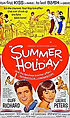
Whilst it was a success in the UK, it didn't do well in the US, mainly due to it being released 2 days after the assassination of JFK
1964: The Beatles release the film A Hard Day's Night at the height of their popularity, which was met with critical and financial success

The film's success is widely regarded as the reason for the rise in popularity of spy thrillers and comedies, as well as influencing a lot of modern media.
1967: The release of the Penny Lane "Promotional Video" by the Beatles, one of the first examples of a music video

The video itself wasn't actually shot in Penny Lane, instead being filmed in other places such as London and Chelsea
1964: The Animals release their version of House of the Rising Sun, which reached #1 on the charts in the UK, US, Canada and Australia

As it was first recorded, the song ran at 4 and a half minutes, regarded at the time as "too long for a music video." Because of this, it was initially released in the US at 2 minutes 58, however was released fully later
1970s
1975: The release of the music video for Bohemian Rhapsody by Queen, which was recorded in 4 hours on a budget of £4,500

Whilst most other bands made video clips to accompany songs, Bohemian Rhapsody sparked the popularity of full length music videos
At 6 minutes long, many other musicians believed the song would never become a hit. Currently, it stands as the third best selling single of all time.
1980s
1982: Pink Floyd create a film based around their 1979 album, The Wall. It follows the same story of the album and uses most of the album's songs (bar two)
1980: David Bowie makes a music video for Ashes to Ashes, which is often remembered for being the first music video to cost over $500,000
1981: Video Killed the Radio Star by The Buggles becomes the first music video to be aired on MTV in the US


The video was also iconic for its use of solarised colour and black & white effects, which, mixed with its budget, makes it one of the most important evolutions of the music video
This music video was also used again to mark the launch of MTV Classic in the UK, in 2010

This film and the album features the iconic song Another Brick In The Wall (Part 2) which has the famous imagery of the marching hammers.

1983: Michael Jackson makes the video for Thriller, which was 14 minutes long. It was iconic for being the first music video to merge filmmaking and music so successfully

The music video reportedly cost $500,000 to make, and made the 2006 Guinness Book of World Records for being the most successful music video, selling over 9,000,000 copies
1990s
1995: Michael Jackson and Janet Jackson make and release Scream, which holds the record for the most expensive music video to make at $7,000,000

2010s
2012: PSY uploads Gangnam Style, which still holds the most YouTube views, at roughly 2,604,800,000 views

The creation of YouTube introduced a platform through which anyone could upload a music video, which got PSY recognised in the first place. Before YouTube, aspiring artists had to get their videos through MTV, s such obscure indie artists didn't have a chance
Scream has remained the most expensive music video for over 20 years due to its heavy use of CGI. The style of the video has also continued to inspire various other music videos, such as TLC's "No Scrubs."

